21 Jul 2011

Creative Stair Solutions

No Comments Uncategorized
Converting an existing attic or basement to living space can increase the value of your home and improve its livability.  However, changes may be required to the existing stair in order to meet the current code.   In this post, I share some creative and efficient solutions that I’ve developed for addressing stairs in renovation projects.
Code Requirements
Stairs in most older homes are not built to the standards of today’s building codes.  If you do not plan on making any changes to the stair as part of your renovation, it can be steeper, narrower and have lower headroom than the current code allows.  However, even existing stairs are subject to some minimum requirements; one of the most challenging to address is the minimum required headroom clearance.
Skylight at the Landing
Cross section showing stair to attic and skylight at top landing.

Cross section showing stair to attic and skylight at top landing.

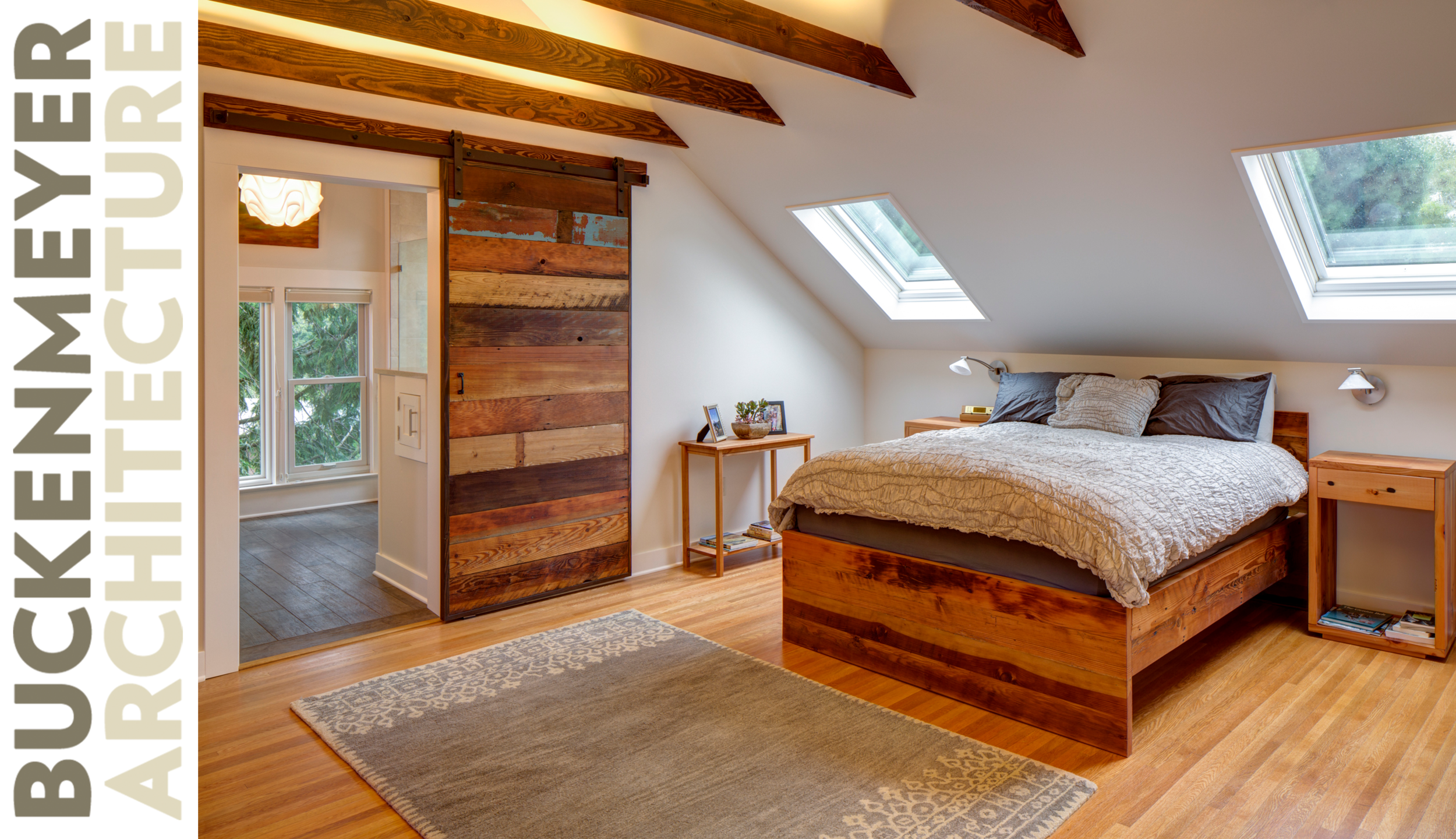
The sloped ceiling at the top of this existing stair did not meet the minimum required headroom clearance and made the stair uncomfortable to use.  However, this low clearance was only an issue for a small area at the top landing.  Raising the roof line or adding a dormer would have been expensive solutions for such a small area.  In this case, a large operable skylight is used to raise the ceiling height at the landing.  It also brightens the room and provides ventilation.

View of the new skylight. The stair is located behind the partial height wall on the right.

View of the new skylight. The stair is located behind the partial height wall on the right. (Photo courtesy of Caleb Plowman Photography)

Creative Cabinetry
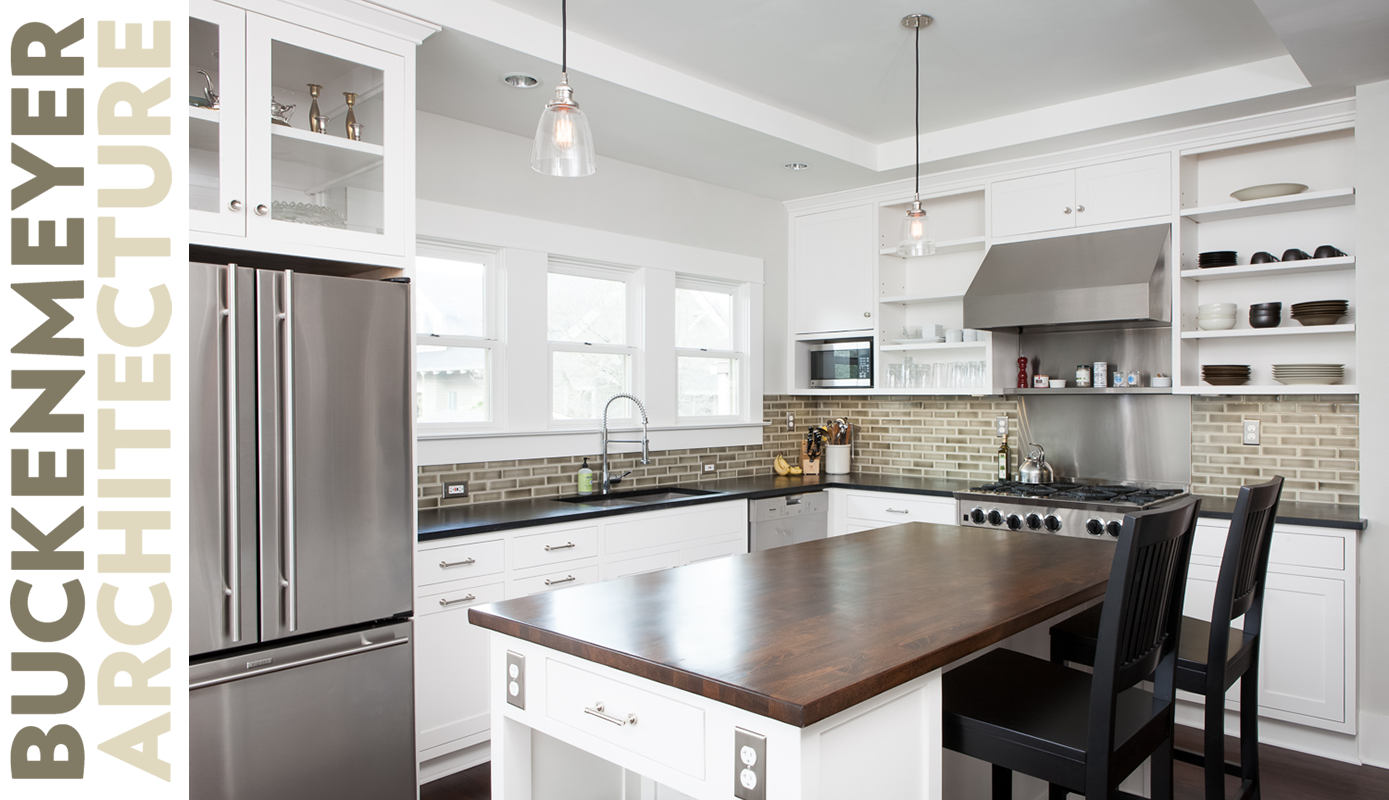
Resolving the connection between the first floor and the basement was a critical element in the kitchen renovation project pictured below.  The existing stair layout created an awkward, dark, and claustrophobic situation.  To make the most of a small space, the framing of the headroom around the new stair to the basement is disguised within custom cabinetry for the kitchen above.  The countertop steps down with the slope of the stair, and shallow-depth cabinets are provided below the counter.  This solution maximizes storage space and opens up the kitchen to more natural light.
Left: The stair to the basement is disguised within this stepped cabinet. Right: Section showing how headroom for stair is accommated below countertop.

Left: The stair to the basement is disguised within this stepped cabinet. Right: Section showing how headroom for stair is accommated below countertop.

Understand the Constraints
Before spending a lot of time or money on your project, it is worth understanding whether or not changes will be required to the existing stair or if you will need to build a new one.  The city of Portland provides a helpful handout which outlines the requirements for stairs in conversion projects.   If you still have more questions about whether or not changes would be required to a stair as part of your plans, feel free to contact Buckenmeyer Architecture at (503) 484-5334 or marty@buckenmeyerllc.com.
Tags: , , , ,
written by
The author didn‘t add any Information to his profile yet.
Related Posts
No Responses to “Creative Stair Solutions”

Leave a Reply